

How Often Should You Clean Your Gutters in Richmond, VA?
A schedule built around Richmond’s trees and neighborhoods, from the Fan to Short Pump, not a one-size-fits-all rule.
The Short Answer
Most Richmond homes need their gutters cleaned twice a year: once in late spring and once in late fall. Under heavy loblolly pine (common in Short Pump, the West End, and parts of Glen Allen), plan on three to four. Under few trees, once or twice is enough. Your trees decide this, not your ZIP code, so the rest of this page helps you find where your own house falls.
How Often Should You Clean Gutters in Richmond, VA?
If you want a number, it’s two. Late April through May, after the pollen, catkins, and seed pods are down. Then late October through November, after the leaves. That rhythm matches how Richmond’s trees actually behave, and it keeps the gutters clear going into our two wettest stretches: summer thunderstorms and the fall and winter rain.
Where people go wrong is treating it like a calendar chore. A house on a bare lot in a newer Chesterfield subdivision and a Church Hill rowhouse under a willow oak do not shed the same amount of debris, and they don’t need the same schedule.
Richmond averages roughly 43 to 44 inches of rain a year, so a gutter that’s full is doing real work against a lot of water. As a rough guide, one inch of rain on 1,000 square feet of roof is about 620 gallons, which is over 5,000 pounds of water that has to go somewhere.
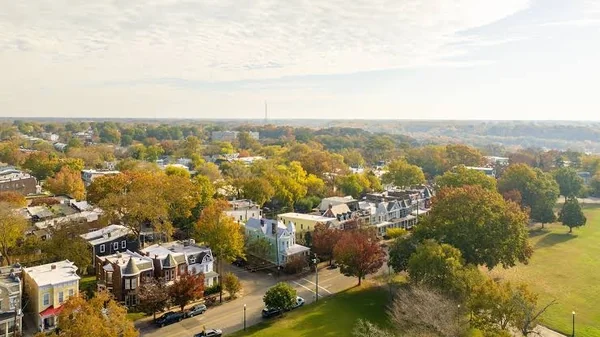
Cleaning Frequency by Richmond Neighborhood
This is the table we’d draw on a napkin for a neighbor. Use it as a starting point, then adjust for the trees over your own roof.
| Area | What drops on your roof | Plan on |
|---|---|---|
| Fan (23220), Museum District (23221), Church Hill (23223) | Willow oak, sweetgum, maple | 2 a year |
| Bellevue, Northside | Mixed broadleaf | 2 a year |
| Short Pump, West End, parts of Glen Allen | Loblolly pine needles and catkins | 3–4 a year |
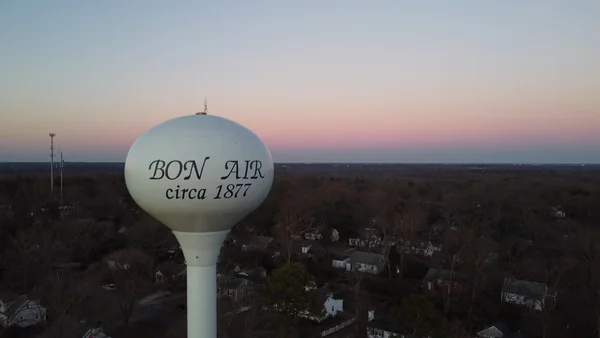
| Bon Air (23235), Stratford Hills | Mixed trees along the James River corridor | 2 a year |
| Midlothian, Chesterfield, newer Henrico subdivisions | Younger, lighter tree cover | 1–2 a year |
General local guidance based on typical tree cover; individual properties vary. For the City’s own street trees, a City-published analysis counted 47,333 street trees, with maples and oaks (including willow oak at about 9 percent) among the most common species.
What Should Change Your Schedule?
Which trees are over your roof?
This is the biggest factor by far. Broadleaf trees drop in a burst: spring seeds and catkins, then leaves in autumn. Pine drops steadily all year, and needles are narrow enough to slip past screens and weave into a mat that holds water. That’s why pine homes need extra visits. We cover the difference in pine needles vs. leaves.
Sweetgum adds a wrinkle: its spiky seed balls fall late and love to jam downspouts, so a gutter that looks clear from the ground can still be blocked at the elbow.

How tall and steep is the roof?
Cost and risk both rise with height, so a three-story home gets more value from a dependable schedule than a ranch house does. A steep Church Hill roof you can’t safely reach is not one to put off.
Did you just have a storm?
Clean after any heavy event, no matter what the calendar says. A tropical remnant or a wind event can dump a season of leaves and branches in one afternoon. See fall and spring timing for the details of each season.
Do you have gutter guards?
Guards reduce cleanings under broadleaf trees but rarely eliminate them, and they often underperform under pine. Plan on checking them at least once a year.
How Can You Tell Your Gutters Can’t Wait?
Skip the calendar and trust these signs:
- Water pouring over the front edge during rain, or trickling at the seams
- Grass, seedlings, or moss growing from the trough
- Dark streaks on siding or paint peeling on the fascia
- Downspouts that run dry in a storm, or that gurgle and back up
- Mosquitoes around the roofline in warm months
What Does Skipping a Cleaning Cost?
A professional cleaning in the Richmond area typically runs about $150 to $550, depending on height and pitch. Two to four visits a year is normal. By comparison, repairing a rotted fascia, treating a damp basement, or fixing foundation movement runs into the thousands. Our cost breakdown shows how pricing is figured.
You can also book a regular gutter cleaning on a schedule so you aren’t deciding every spring and fall.
Tell us your trees and your roof height and we’ll tell you how often your house really needs it.
Call (804) 460-6786More Richmond-specific advice lives in our Richmond gutter guides.
Frequently Asked Questions
How often should gutters be cleaned in Richmond, VA?
Twice a year is the baseline: late spring and late fall. Homes under heavy pine often need three to four cleanings.
Is twice a year enough if I have oak or maple trees?
Usually yes, as long as one visit comes after leaf drop in late October through November. Sweetgum can call for a later pass in December.
Why do Short Pump and West End homes need more cleanings?
Loblolly pine sheds needles and catkins nearly year-round, and the needles mat together in the trough, so the debris builds faster than it does under hardwoods.
Should I clean my gutters after every storm?
Not every rain, but after any heavy event with wind or debris, take a look from the ground and clean if the trough is packed or water is overflowing.
Do gutter guards mean I can clean less often?
They can reduce visits under broadleaf trees, but fine debris still collects. Check guarded gutters at least once a year.
Put Your Gutters on a Schedule
Call for a cleaning plan matched to your trees and your roof.
Call (804) 460-6786 Get Free Estimate