

Clogged Gutters and Mosquitoes in Richmond, VA
The two mosquito species actually behind Richmond’s summer bites, and why a clogged gutter is one of their favorite places to breed within a mile of your porch.
The Short Answer
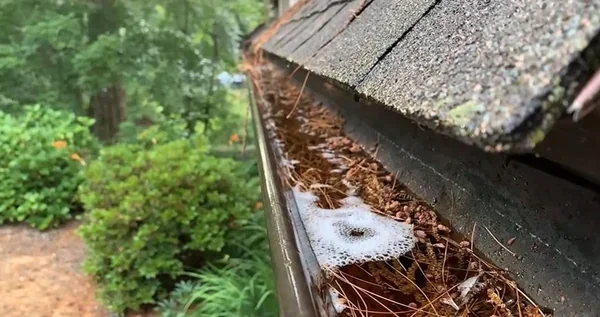
Standing water sitting in a gutter for more than about a week is enough time for a mosquito to complete its full breeding cycle, from egg to biting adult. Richmond’s two most common species — the common house mosquito and the Asian tiger mosquito — both use clogged gutters as a breeding site, and one of them is the region’s primary carrier of West Nile virus. Keeping gutters clear and draining is one of the most effective things a homeowner can do to cut this off at the source. See our full pricing guide for what regular cleaning actually costs.
The 7-Day Rule: Why Gutters Make a Perfect Nursery
A mosquito’s entire life cycle — egg, larva, pupa, biting adult — can complete in as little as 7 to 10 days depending on temperature, according to entomology extension research. That’s exactly the window a clogged gutter can hold standing water between rain events, especially once debris has built up enough to slow drainage. Virginia’s own extension experts specifically list clogged rain gutters alongside storm drains and other standing water as a primary mosquito breeding site, and the general guidance is to eliminate any standing water source that sits for more than seven days.
A gutter that’s draining properly never gives mosquitoes that window. One that’s clogged does, on a schedule that matches their biology almost exactly.
The Two Mosquito Species Richmond Actually Deals With
Virginia is home to nearly 60 mosquito species, but two are responsible for almost all the bites and breeding activity around Richmond homes, and they behave very differently:
Culex pipiens (Common House Mosquito)
Small and brown, most active at dawn and dusk, and the primary carrier of West Nile virus in Virginia. It prefers stagnant, organically rich water — exactly what a debris-packed gutter provides — and can range up to two miles from where it hatches. Populations build through June and peak in August.
Aedes albopictus (Asian Tiger Mosquito)
The most common source of mosquito bites in our area, and unlike the house mosquito, it bites aggressively during the day. It breeds in smaller pockets of standing water — gutters, bottle caps, flower pot saucers — and typically stays within about 600 yards of its breeding site.
Species and behavior data sourced from Virginia Cooperative Extension (Master Gardeners of Northern Virginia) and regional entomology sources, 2026.
The Real Health Risk: West Nile Virus
West Nile virus, carried by the common house mosquito, is the most frequently reported mosquito-borne disease in Virginia and remains the leading domestically transmitted mosquito-borne illness in the continental United States. Most people who are infected experience no symptoms at all or a mild, flu-like illness. A much smaller percentage go on to develop serious neurological complications, which is why public health guidance still treats mosquito-breeding-site reduction as a meaningful precaution, not an overreaction.
Eastern equine encephalitis is rarer in Virginia but more severe when it does occur, with sporadic outbreaks reported across the mid-Atlantic. Zika and dengue remain low-risk here outside of travel-related cases, though the Asian tiger mosquito’s growing presence in Virginia means local transmission is at least theoretically possible during peak season.
Why Richmond’s Climate Makes This Worse
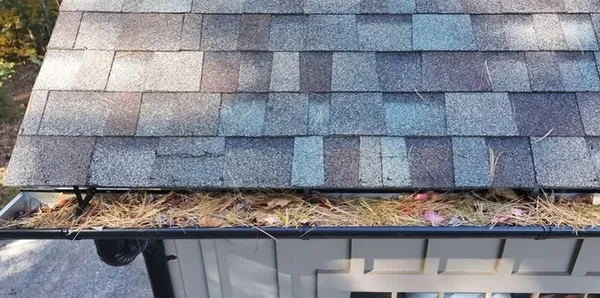
Central Virginia’s roughly 44 inches of annual rainfall, combined with hot, humid summers, is close to ideal for both species. Heat and humidity accelerate every stage of the mosquito life cycle, shortening the gap between a rain event filling a clogged gutter and a new generation of adults emerging. Fast summer thunderstorms are especially effective at this — a heavy downpour fills a debris-packed gutter quickly, and the same clog that caused the overflow keeps that water sitting there afterward instead of draining away.
Not sure if your gutters are holding water between storms? Tell us what you’re seeing and we’ll take a look.
Call (804) 460-6786How to Check If Your Gutters Are a Breeding Site
A few days after a rain, take a look:
- Standing water still visible in the gutter trough several days after the last rain, rather than a dry or nearly dry gutter
- Small mosquito larvae (“wigglers”) visible near the surface of any pooled water
- Mosquito activity concentrated specifically near your roofline or eaves at dusk
- Visible debris buildup thick enough to slow drainage, even if the gutter isn’t fully overflowing
A properly draining gutter should be dry within a day or two of the rain stopping. If you’re consistently seeing standing water longer than that, it’s a sign the gutter is clogged enough to matter, not just cosmetically full.
Breaking the Cycle: Why Cleaning Interrupts Both Timelines
Clearing a gutter doesn’t just stop future rain from pooling — it removes the water and larvae that may already be developing in it. Since the mosquito life cycle and a clogged gutter’s water-retention window run on roughly the same 7-to-10-day schedule, a regular cleaning interval that keeps gutters draining properly effectively denies mosquitoes the one thing their whole life cycle depends on. See our main gutter cleaning service page for what a standard visit includes, and our guide on how often to clean your gutters to build a schedule that keeps ahead of it.
Frequently Asked Questions
How long does standing water need to sit before it’s a mosquito risk?
Around seven days is the general guideline used by extension entomologists, since that’s roughly enough time for a full breeding cycle to complete in warm weather.
Which mosquito is more likely to be breeding in my gutters specifically?
Both species use gutters, but the common house mosquito (Culex pipiens) particularly favors stagnant, debris-rich water like what accumulates in a clogged gutter, while the Asian tiger mosquito is more of a generalist across any small standing water source.
Will gutter guards prevent mosquito breeding?
They help by reducing the debris that slows drainage in the first place, but guards alone don’t guarantee a gutter drains fully. See our gutter guard installation page for how we approach that.
Is West Nile virus something I should actually worry about in Richmond?
It’s present in Virginia and worth taking seriously as a reason to reduce breeding sites, but most infections are mild or asymptomatic. Serious complications are uncommon, though not impossible, which is why standard precautions like gutter maintenance are worthwhile without needing to be alarmed.
Don’t Let Your Gutters Run on a Mosquito’s Schedule
A cleaning that keeps your gutters actually draining removes the one thing mosquitoes need most.
Call (804) 460-6786 Get Free Estimate